Installation · UK Solar
Do You Need a Roofer to Install Solar Panels?
With the right mounting system, any competent tradesperson can handle the full installation — roofer, electrician, AC engineer, or confident DIYer. Here is exactly what solar panel installation involves at roof level, who can carry it out under UK standards, and what MCS 012 3.0 actually requires of the installer.
Key Takeaways
- —The SolVe Mount installs through any roof tile without removing tiles or dressing flashing.
- —Installation requires a 28mm diamond core hole, pre-drilling the rafter and tightening a nut — no specialist skills required.
- —MCS 012 3.0 Certified. Compatible with all MCS Certified rails.
- —Suitable for roofers, electricians, AC engineers, solar installers, and competent DIYers.
- —Typical installation takes less than 60 seconds per mount.
The Traditional Problem
Why People Assume You Need a Roofer
Traditional solar mounting methods involve removing roof tiles, cutting lead flashing, and creating open penetrations through the waterproof layer of the roof. That work — manipulating the weather envelope of a building — is roofing work. It requires knowledge of how different coverings behave, how flashings seal around penetrations, and what proper weatherproofing looks like on each roof type.
That assumption has shaped how the UK solar industry operates. Most installation companies either employ a qualified roofer or subcontract one for every job. For trades without a roofer on their team, that has traditionally meant subcontracting the roof work or turning down jobs entirely.
The SolVe Mount was designed so that any trade can install the full system confidently — with or without a roofer on the team.
The Process
How the SolVe Mount Works — and Why It Changes the Answer
The SolVe Mount never removes a tile or slate. As described on our how it works page, the full process at roof level is three steps.
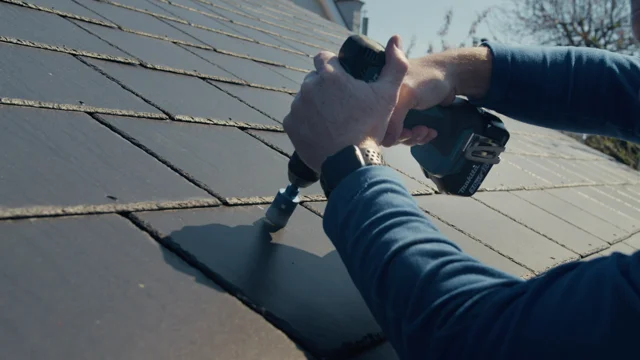
Core
A 28mm diamond core bit cuts through the tile or slate. The tile stays in place — nothing is removed, nothing is disturbed.
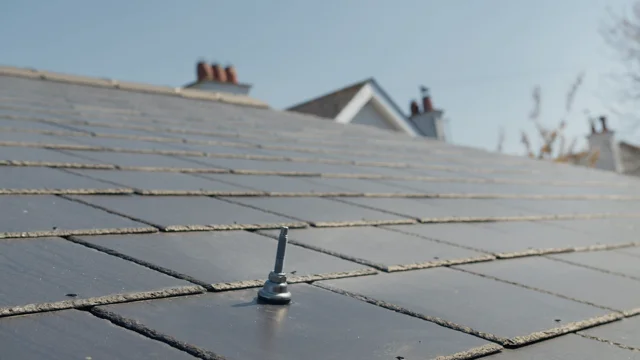
Fix
Pre-drill the rafter using the drill guide provided, then fix the SolVe Mount through the core hole and into the rafter below.
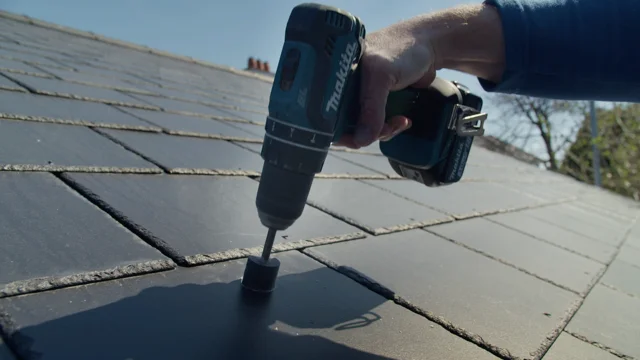
Tighten
Tighten a single nut. As it tightens, the seal expands outward against the walls of the core hole, creating an IPX8-rated watertight barrier.
No lead flashing. No exposed timber. No open penetration left in the roof. Suitable for all tradesmen and competent DIYers.
Trades
Who Can Install the SolVe Mount

The universal SolVe Mount requires using a 28mm diamond core drill bit and tightening a nut. If you can do that, you can install solar roof mountings perfectly.
Roofers
Roofers are naturally suited to the SolVe Mount. You already work at height, understand roof structures, and know how to core materials. The SolVe Mount's fit-and-forget design means less time on each roof — no flashing to dress, no tiles to remove and refit. Finish more jobs per day and add solar mounting to your services without changing how you work.
Electricians
Solar panels produce electricity — a system that electricians connect every day. The panel mounting has traditionally been the one part of the job that required a separate trade. As described in our installation article, with the SolVe Mount, that is no longer the case. Electricians already drill, work at height, and understand mechanical fixings.
Air Conditioning Engineers
Solar and air conditioning are complementary — both are energy management systems for a building. AC engineers expanding into solar can now install the full system themselves — panels, wiring and mounting — without subcontracting the roof work.
Solar Installers
If you install panels and the electrics but currently subcontract the roof mounting, the SolVe Mount lets you bring the full scope of work in-house — better margins, simpler scheduling.
Confident DIYers
As set out in our DIY installation article, if you have ever drilled a wall fixing or tightened a nut, you have every skill the installation requires. No specialist knowledge is needed at any point.
Certification
What MCS 012 3.0 Actually Requires
MCS 012 3.0 is the UK's microgeneration certification standard for solar panel mounting systems. It sets out the structural and waterproofing requirements that a mounting system must meet before it can be used on a certified installation. The SolVe Mount is MCS 012 3.0 certified and BBA certified — independently assessed and confirmed to meet those requirements.
What MCS 012 3.0 does not state is that the person carrying out the installation must be a qualified roofer. The standard governs the performance of the product, not the trade background of the installer. Provided the installation is carried out competently using a certified product, the standard is met. SolVe's training platform provides a structured walkthrough of the full installation process.
A Note on the Smart Export Guarantee
If you wish to claim Smart Export Guarantee (SEG) payments — the UK government scheme that pays for electricity exported to the grid — your system must be installed by an MCS-certified installer. The certification applies to the installer company, not solely to the product. For self-consumption systems where exporting to the grid is not the goal, MCS certification is not required to operate the system.
Waterproofing
Will the SolVe Mount Leak? The IPX8 Evidence
The most common concern from trades approaching solar mounting for the first time. It is a fair concern — a roof penetration that fails is a serious matter.

As detailed in our engineering article and the accompanying test report (SOL-DO-P2301-300-4), the SolVe Mount seal is tested to IPX8 — the highest waterproofing classification under IEC 60529.
The IEC 60529 IPX8 standard requires submersion for one hour. The SolVe Mount was tested submerged for 30 days — thirty times the required duration — with no ingress observed.
The pressure generated by 100 mph wind-driven rain on a UK roof is 1.21 kPa. The SolVe Mount was tested to 8.2× that figure. For the seal to allow any water ingress at all, it would need to lose 88% of its sealing force — a level of degradation it is engineered to resist for well over 100 years.
The waterproofing of a SolVe Mount installation exceeds what a traditional lead flashing installation achieves.
Rafter Location
How Do You Find the Rafters?
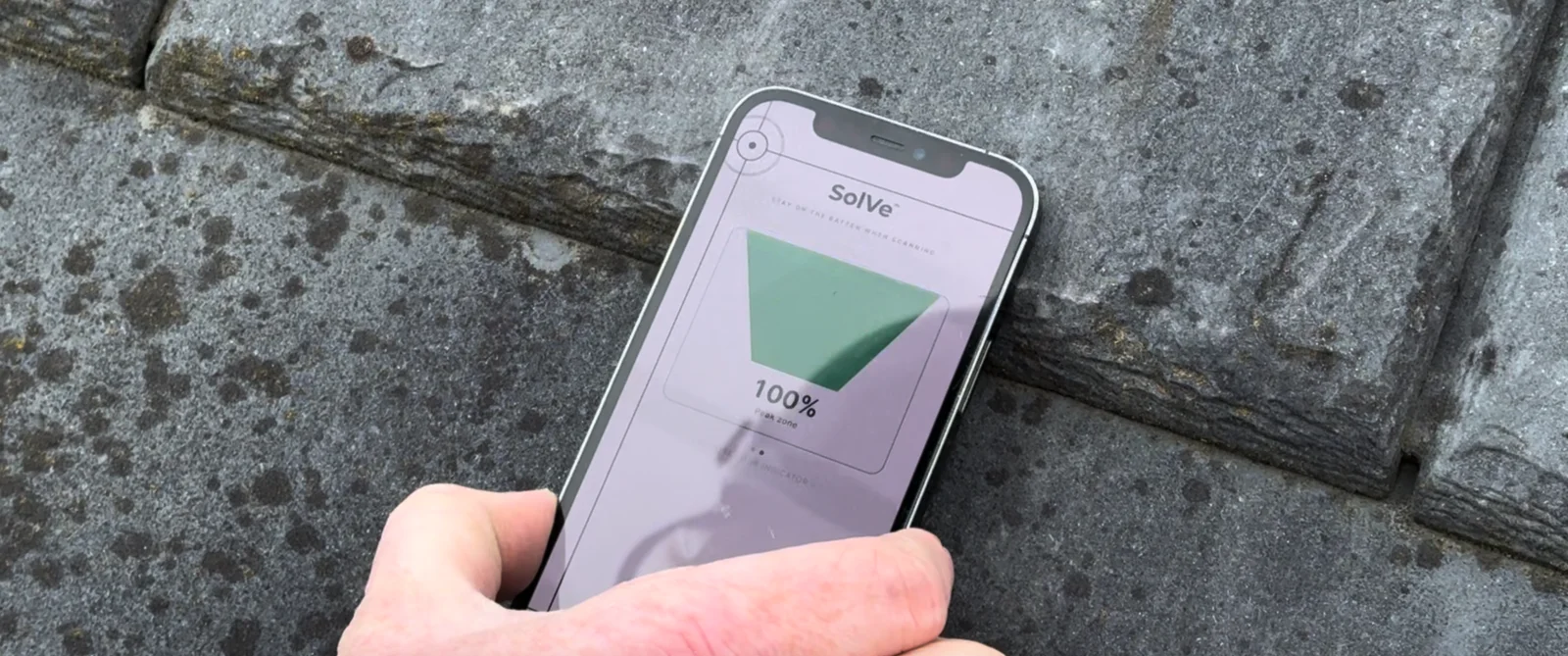
The one step that requires care is locating the rafters before coring. Coring directly over a rafter is what gives the fixing its structural integrity.
SolVe provides the Rafter Finder — a purpose-built tool that locates rafters through the roof covering without removing any tiles or slates. As described in our installer checklist, using the Rafter Finder is step one — the rest of the installation follows in sequence.
Compatibility
Which Roof Types Are Covered
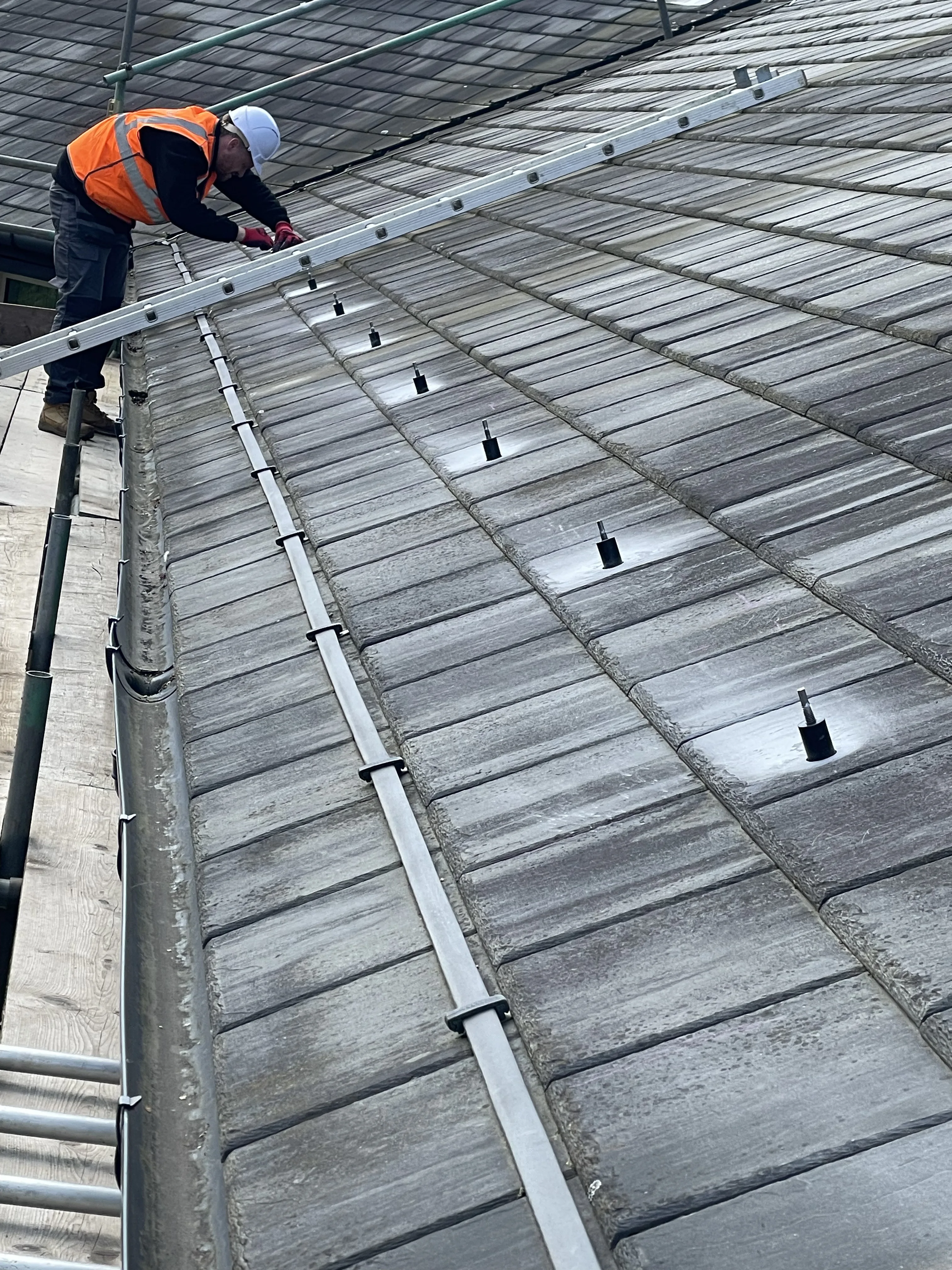
- Slate (natural Welsh, blue/grey)
- Composite slate
- Heavy slate
- Cambrian interlocking slate
- Stone
- Concrete plain tiles
- Clay plain tiles
- Rosemary tiles
- Concrete interlocking tiles
- Plain metal roofing
At a Glance
Traditional Mounting vs SolVe Mount
| Traditional | SolVe Mount | |
|---|---|---|
| Roofer required? | Often | No |
| Tiles removed? | Often | Never |
| Waterproofing | Lead flashing | IPX8 — 8.2× safety margin |
| MCS 012 3.0? | Varies | Certified |
| Roof types | Limited | 10+ |
| Warranty | Varies | 20 years |
FAQ
Frequently Asked Questions
The SolVe Mount is designed to be installed by any competent tradesperson — roofer, electrician, AC engineer, solar installer, or confident DIYer. No tiles are removed. Suitable for all tradesmen and competent DIYers.
Yes. Electricians routinely core through building materials and fix into structural timbers — those are precisely the skills the SolVe Mount installation requires.
MCS 012 3.0 is the UK standard for solar panel mounting systems. It governs the structural and waterproofing performance of the product itself. The SolVe Mount is MCS 012 3.0 certified. The standard does not require the installer to be a qualified roofer.
To claim Smart Export Guarantee (SEG) payments, your installation must be carried out by an MCS-certified installer. The certification applies to the installer company, not solely to the product. For self-consumption systems where exporting to the grid is not required, MCS certification is not a legal requirement to operate the system.
The SolVe Mount is tested to IPX8 — the IEC 60529 standard requires submersion for one hour; the SolVe Mount was tested submerged for 30 days with no ingress observed. The test pressure is 8.2× higher than 100 mph wind-driven rain. The seal would need to lose 88% of its sealing force before any ingress could occur — a level of degradation it is engineered to resist for well over 100 years.
Continue Reading
You Might Also Find Useful
Installation
Install Solar Panel Mounts Yourself
A step-by-step walkthrough of the full SolVe Mount installation — core, fix, tighten. Suitable for all tradesmen and competent DIYers.
Engineering
Built to Last: IPX8 Seal, A4-80 Bolt & Fire Safety
The technical evidence behind the SolVe Mount's IPX8 waterproofing rating, A4-80 stainless steel bolt, and fire safety compliance.
Tools
What Tools Do I Need to Install the SolVe Mount?
A complete checklist of every tool and fixings needed for a SolVe Mount installation, from first core to final torque check.